
Why Won’t My Child Talk to the Teacher?
A Square One Method™ Guide
UNDERSTANDING WHEN SCHOOL SILENCE MAY BE RELATED TO SELECTIVE MUTISM
Many children who struggle with speaking anxiety talk comfortably at home but become silent at school or around unfamiliar adults. This guide explains why that happens and what parents can do to help.
01. Introduction
Many parents are surprised when a child who is talkative and expressive at home becomes completely silent at school.
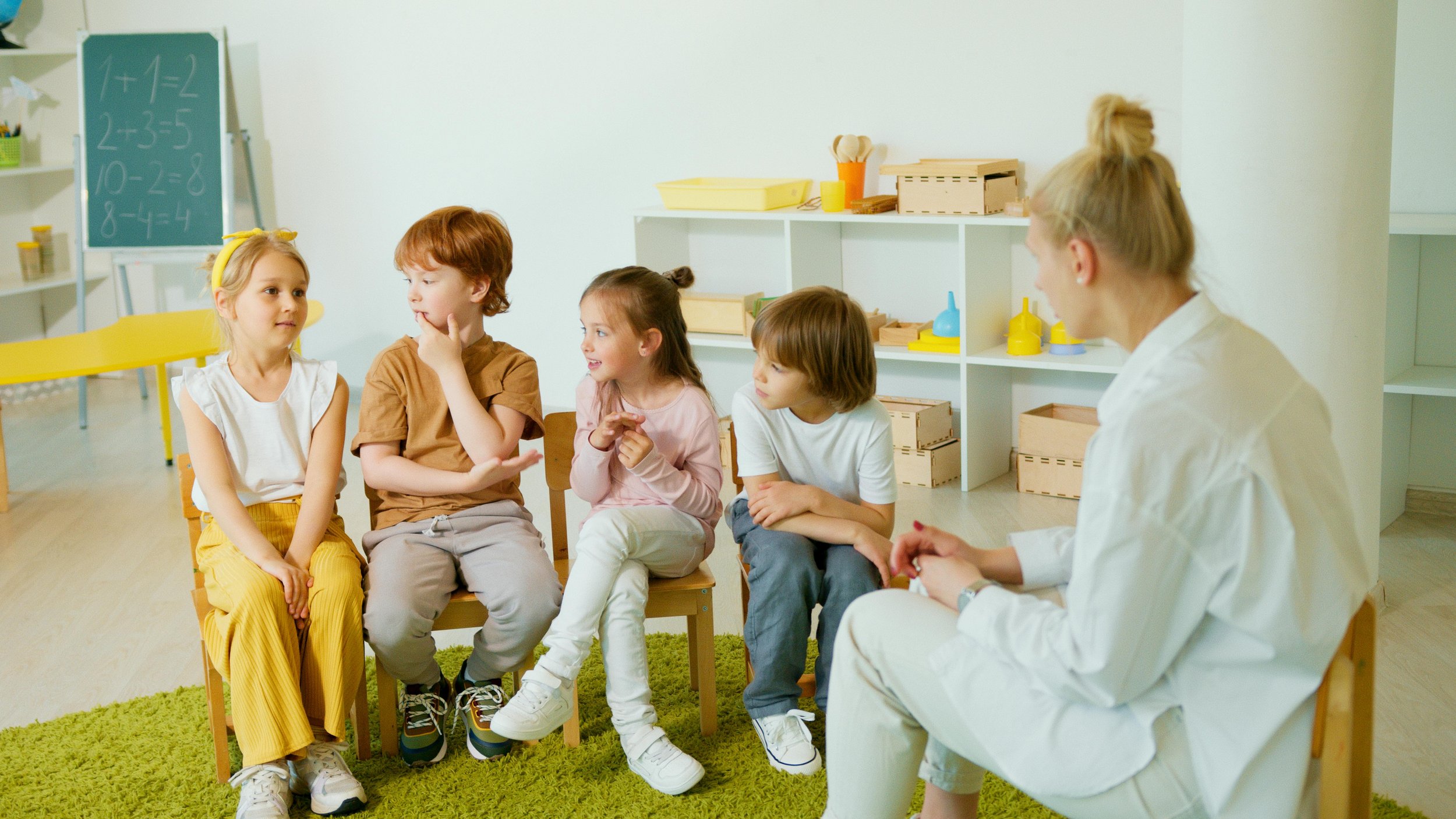
Teachers may describe a child who appears comfortable participating in classroom activities but does not answer questions aloud or initiate conversation. Some children rely on gestures, nodding, or whispering to communicate. Others may look down, freeze when addressed directly, or avoid situations where they might be expected to speak.
This difference between how a child communicates at home and how they communicate at school can be confusing for families. Parents may wonder whether their child is simply shy, refusing to participate, or struggling with something deeper.
In many cases, the underlying issue is not that a child won’t speak, but that anxiety makes speaking feel extremely difficult around certain people, places, or activities. The child may want to answer a question or greet a teacher, but their nervous system reacts in a way that makes words feel stuck in the moment.
When this pattern becomes consistent across school or social settings, it may be related to Selective Mutism, an anxiety condition that affects a child’s ability to speak in specific environments even though they are capable of speaking comfortably elsewhere.
Understanding why this happens can help parents and teachers respond in ways that support a child’s growing confidence rather than unintentionally reinforcing silence.
02. what parents often notice first
Children who struggle with speaking anxiety almost always speak comfortably somewhere. At home they may be chatty, playful, and eager to share stories, jokes, or imaginative ideas with family members. Many parents describe their child as energetic, expressive, and socially engaged with people they know well.
School environments, however, introduce a very different set of expectations and social dynamics. Classrooms involve unfamiliar adults, groups of peers, and situations where children are expected to respond verbally in front of others.
Teachers may notice that the child rarely answers questions aloud during lessons or group discussions. Instead of speaking, the child may nod, shrug, or point to communicate. Some children whisper only to one trusted adult or peer, while others remain completely silent even when they appear engaged in the activity.
Parents often describe the experience as watching their child become a different version of themselves outside the home. A child who talks freely at the dinner table may become quiet and withdrawn at school, leaving adults puzzled about what changed.
This contrast between comfortable speech at home and silence in other environments is one of the most common patterns associated with selective mutism.
03. why some children stop speaking at school
For children with speaking anxiety, environments like classrooms can feel overwhelming even when they appear calm on the outside.
School settings often include adults with authority, groups of peers, and frequent expectations to respond verbally. Even everyday routines such as morning meetings, attendance, or answering a teacher’s question can feel highly visible and socially demanding.
When a child anticipates the possibility of speaking in these situations, their nervous system may react as if they are facing a threat. Instead of feeling able to speak freely, the child may experience what clinicians often describe as a freeze response.
In those moments, the child may know exactly what they want to say. They may even rehearse the answer in their mind. But when the moment to speak arrives, their voice feels stuck and the words do not come out.
This reaction is not a sign of stubbornness or defiance. Rather, it reflects the way anxiety can temporarily block speech in certain environments. Remaining silent becomes the child’s way of coping with that anxiety in the moment.
Over time, if speaking situations repeatedly feel overwhelming, the child may begin to anticipate those moments with worry and rely more heavily on nonverbal communication instead.
04. when school silence may be selective mutism
Not every quiet child has selective mutism. Many children take time to warm up in new environments before they begin speaking comfortably.
However, selective mutism is more likely when a child consistently speaks normally in some settings but remains silent in others. Teachers may report that the child rarely answers questions verbally, avoids speaking with peers, or relies heavily on nonverbal communication such as pointing, nodding, or gesturing.
This pattern often becomes more noticeable after the first month or two of school, when speaking expectations increase during classroom activities, group discussions, and social interactions with peers.
Selective mutism is best understood as a difficulty with speaking caused by anxiety, not defiance, stubbornness, or a lack of motivation. Children with this pattern often want to participate and make connections with others. They may feel frustrated or embarrassed that they cannot respond the way they would like.
Over time, some children begin to believe that they simply cannot speak in certain environments. They may come to rely more heavily on gestures or written communication, which can make the pattern of silence feel harder to change without supportive intervention.
Recognizing these signs early can help families and educators respond in ways that encourage gradual progress rather than increasing pressure.
05. Why prESSuring a Child to Speak Can Backfire
When adults notice a child staying silent, it is natural to want to help them participate.
Parents and teachers may encourage the child to answer a question, greet a classmate, or respond verbally during an activity. Some adults may reassure the child that there is nothing to worry about or remind them that they speak comfortably in other settings.
Although these responses are well intentioned, they can sometimes increase the pressure a child feels in the moment. When speaking already triggers anxiety, additional expectations to respond quickly can intensify the nervous system’s reaction.
Instead of helping the child speak, the pressure may reinforce the cycle of anxiety and silence. The child may begin to associate speaking situations with increased attention, worry about disappointing adults, or fear of making a mistake.
Supportive approaches tend to focus on reducing this pressure while gradually helping children build comfort using their voice. Rather than expecting immediate verbal participation, children benefit from opportunities to practice speaking in small, manageable steps.
06. What Helps Children Begin Speaking
Children with selective mutism don’t begin speaking in school because they’re encouraged to “try” — they begin speaking when the environment is carefully structured to make success feel possible.
In classroom settings, this often starts by lowering the initial speaking demand and focusing first on helping the child feel comfortable, engaged, and regulated in the space. Rather than expecting verbal participation right away, early progress may look like joining an activity, interacting nonverbally, or communicating with a trusted adult in very small, supported ways.
From there, speaking is introduced gradually through planned, achievable steps. These are not random opportunities, but intentionally designed “brave talking” moments that are just slightly outside the child’s current comfort zone. For one child, this might mean responding to a forced-choice question in a quiet corner of the classroom. For another, it may involve whispering to a teacher when no peers are nearby, before building toward more audible speech over time.
A key strategy in school-based work is the use of fade-ins, where a child begins speaking with someone they are already comfortable with — often a parent or familiar adult — and a new communication partner (such as a teacher) is gradually introduced into that interaction. This allows the child to experience success with speaking while slowly expanding who they can communicate with, rather than being expected to speak to a less familiar adult right away.
As these small moments of success are repeated, the child’s comfort begins to expand across different combinations of people, places, and activities. The goal is not to push for immediate, full participation, but to build momentum through consistent, supported practice.
This process works best when it is coordinated across the adults in the child’s environment. Parents, teachers, and clinicians each play a role in shaping these experiences — adjusting expectations, pacing challenges appropriately, and reinforcing progress in a way that builds confidence without increasing pressure.
When these pieces come together, children are not left waiting to “feel ready” to speak. Instead, they are given a clear, supported path for using their voice—one small step at a time.
07. When ParenTS May Want ProfeSSIONAL Support
Parents may consider seeking professional guidance when a child has not spoken at school for an extended period of time, when teachers report little or no verbal participation, or when speaking anxiety appears to interfere with friendships, learning, or classroom participation.
Early support can make a meaningful difference. When children receive guidance that helps them practice speaking in gradual, manageable steps, they often begin to build confidence more quickly than when the pattern of silence continues without support.
Professionals who specialize in selective mutism can help families understand how anxiety is affecting the child’s communication and provide structured strategies for encouraging brave speaking across environments.
With the right combination of support at home, school, and in treatment, many children begin to feel more confident using their voice and participating in everyday interactions.
Support for Selective Mutism
At Square One Psychology, treatment for selective mutism is grounded in Parent-Child Interaction Therapy Adapted for Selective Mutism (PCIT-SM), an evidence-based approach designed to help children gradually build comfort using their voice across environments.
Services are available for individual families as well as in intensive group-based formats, which allow children to practice speaking with peers while receiving structured support and repeated opportunities for brave communication. Research shows that these concentrated formats can help accelerate progress by providing frequent, supported speaking practice.
A central part of treatment is parent coaching. Parents learn practical strategies to help their child approach speaking challenges step by step, so they can effectively serve as their child’s “brave talking coach” in everyday situations outside the therapy room.
We also frequently collaborate with schools and educational teams to help create a supportive, change-ready environment. Coordinating strategies across home, school, and therapy helps ensure that gains made in treatment can generalize to the settings where children most need their voice.
Families who are wondering whether their child may be experiencing selective mutism — or who would like guidance on how to support speaking confidence — are welcome to schedule a Discovery Call to discuss their child’s needs and explore next steps.
-
Many children with selective mutism speak comfortably in familiar environments such as home but become silent in settings that feel more socially demanding, like school. At home, children are surrounded by people they know well and situations that feel predictable and safe. School environments, however, introduce unfamiliar adults, peer dynamics, and expectations to respond verbally in front of others. For children with speaking anxiety, these situations can trigger a nervous system response that makes speaking feel extremely difficult in the moment, even when the child wants to respond.
-
Some children take time to warm up to new adults, especially at the beginning of the school year. However, when a child consistently avoids speaking to teachers or classmates despite being able to speak easily at home, anxiety may be interfering with their ability to communicate. Children with selective mutism often want to participate and answer questions but feel unable to do so when attention is focused on them. If silence persists for several months or significantly affects classroom participation, it may be helpful to seek guidance from a professional familiar with selective mutism.
-
Shy children may feel hesitant or quiet when meeting new people, but they usually begin speaking once they feel comfortable in the situation. Children with selective mutism often experience a much stronger anxiety response that prevents them from speaking in certain environments, even when they want to. The key difference is that selective mutism involves consistent difficulty speaking in specific settings, such as school, while the child speaks normally in other settings like home. If the pattern persists over time, it may reflect speaking anxiety rather than typical shyness.
-
Children with selective mutism may experience a freeze response when they are suddenly expected to speak. In these moments, the nervous system reacts as if the child is facing a threat, even though the situation is socially routine. The child may know exactly what they want to say but feel as though the words cannot come out. This reaction is a common feature of anxiety and does not mean the child is refusing to participate. With supportive coaching and gradual speaking opportunities, many children learn to tolerate these moments and respond more comfortably over time.
-
Some children gradually become more comfortable speaking as they gain familiarity with their environment. However, selective mutism often benefits from early support that helps children practice speaking in manageable steps. Without guidance, children may continue relying on avoidance strategies such as whispering, nodding, or remaining silent in certain settings. Evidence-based approaches that combine gradual exposure, parent coaching, and collaboration with schools can help children build speaking confidence and reduce anxiety across environments.